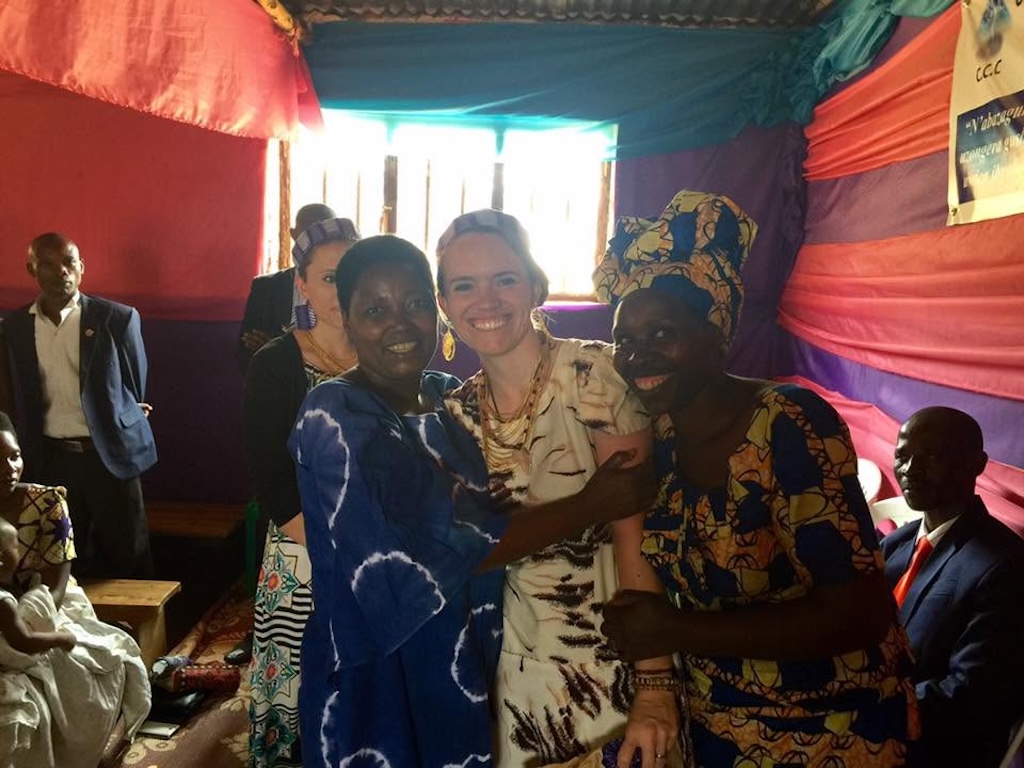
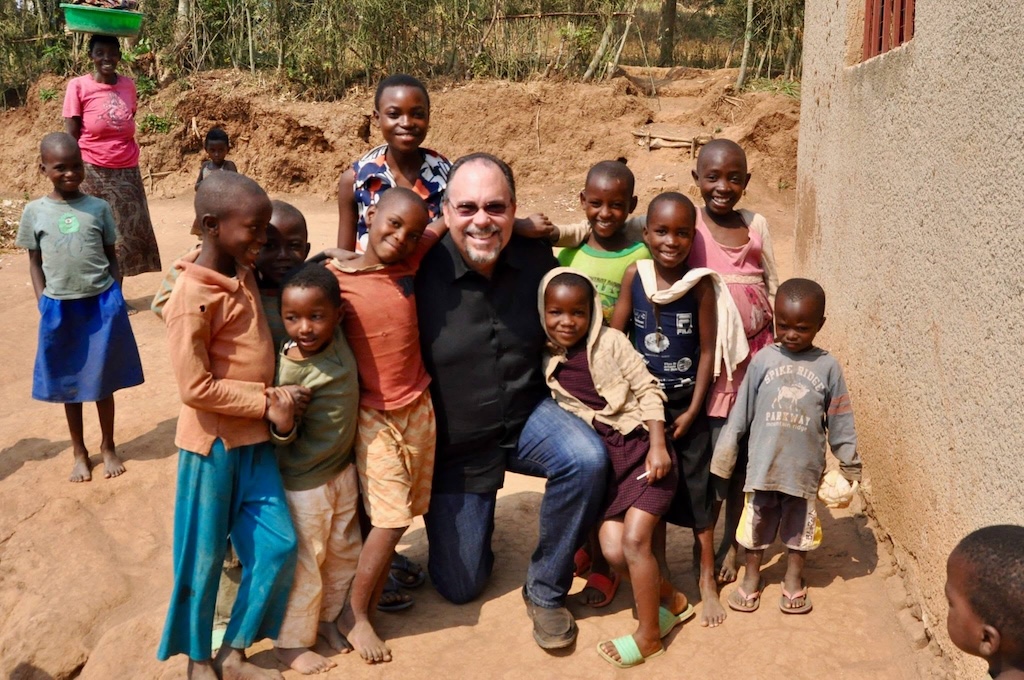
In June 2015, Papa Matthew received a call from a pastor in Monrovia, Liberia, West Africa—our adopted daughter Mercy’s birth town.
“Matt, would you please come and preach a crusade, do a youth rally, and conduct pastors’ training this fall?”
He instantly replied, “Yes! I have been praying for seven years that God would let me go see my daughter’s birth home! October? Yes, I will be there!”
Papa Matthew sensed when Pastor Paye called from Liberia that it was a message from the Lord, but he simply could not have known how thrilling it would be to go there with Mercy and meet some of her blood relatives.
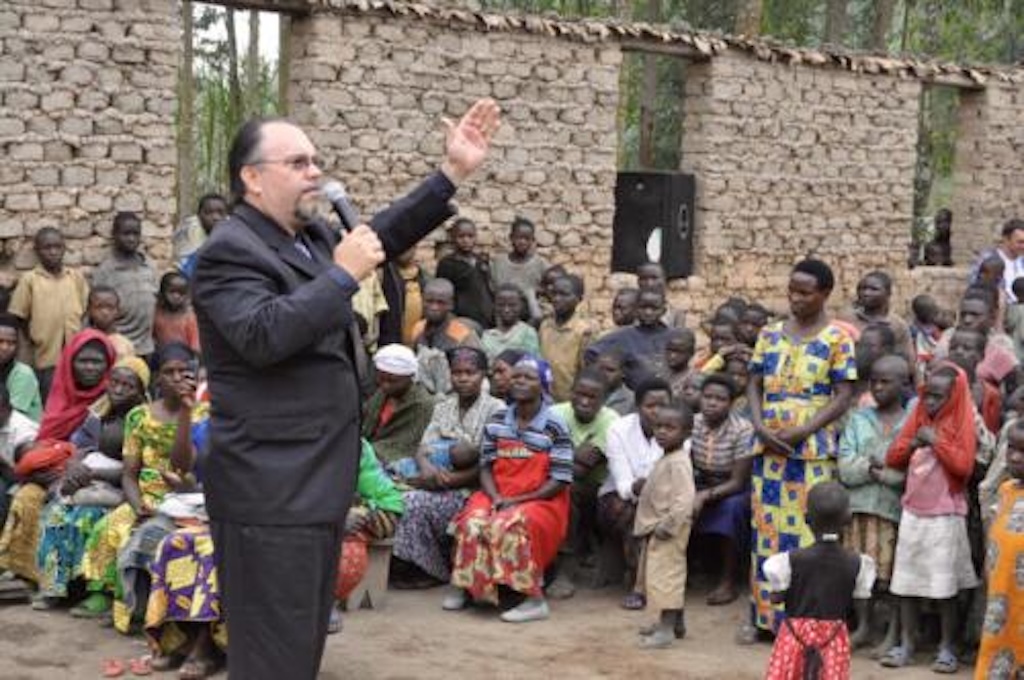
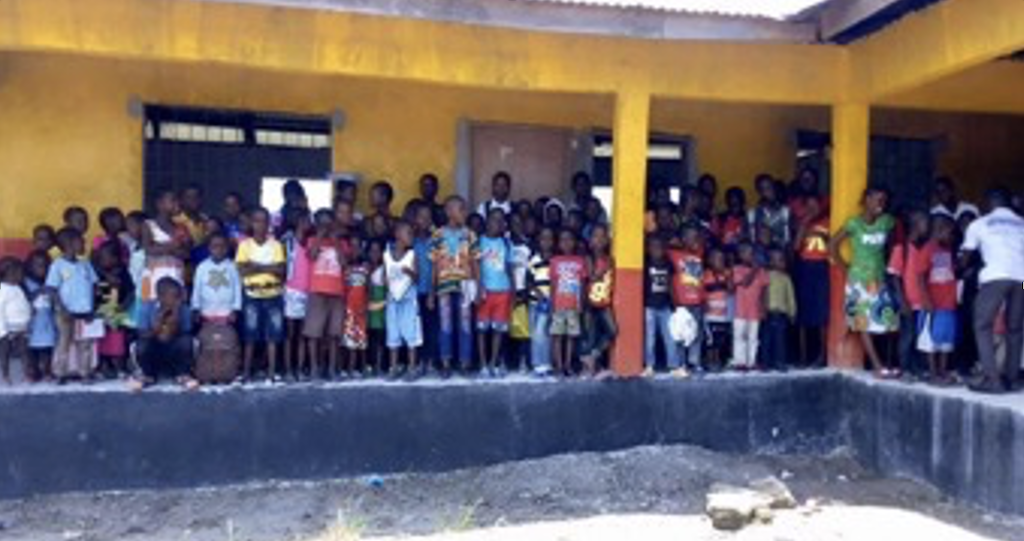
Each and every gospel service was on fire! What a joy to stand on that stage night after night and see people flood in from the surrounding villages and neighborhoods to hear the gospel—and then to see the altar packed each night as hundreds came to trust in Jesus. Each day, they visited a different school and shared Jesus with the children, and they also held pastors’ seminars and youth seminars. The Spirit moved in power, and they were overjoyed to be a part of it all. Thank You, Lord!
When Rebekah and Matthew had visited Rwanda in January of that same year, they felt led, along with their Rwandan pastor friend, Ndagijimana, to start a school and call it Mercy’s House in honor of their precious Liberian daughter, Mercy. Pastor Ndagijimana told them about a perfect piece of land that was available for $10,000.
They said, “We will pray.”
In August of 2015, Matthew and Ndagijimana were on the phone when the Spirit came heavily upon Papa Matthew, and he said, “We will have that $10,000 by the end of the month.”
They had no money and no prospects of receiving any, but the message from the Spirit was strong.
A few days later, they were having a prayer meeting with several ministry friends. Mama Lisa, uncharacteristically, mentioned the specific amount in her prayer: “Lord, please give us $10,000 for Mercy’s House Rwanda.”
At the end of the prayer, a young woman approached Rebekah and Matthew. She was shaking, and there were tears in her eyes.
She said, “My husband and I need to talk to you right now.”
The four of them stepped into an adjacent space, and she related how, during the prayer, the Holy Spirit had told her to give the $10,000 she had received just the day before as an inheritance. She had quickly walked up to her husband to tell him what the Holy Spirit had told her, but before she could speak, her husband said, “Yes.”
She said, “You don’t even know what I was going to ask you.”
He replied, “Yes, I do, and the answer is yes.”
Then she looked at Rebekah and Matthew, still trembling, and said, “So, we are giving you the $10,000 for Mercy’s House Rwanda.”
They were humbled and stunned.
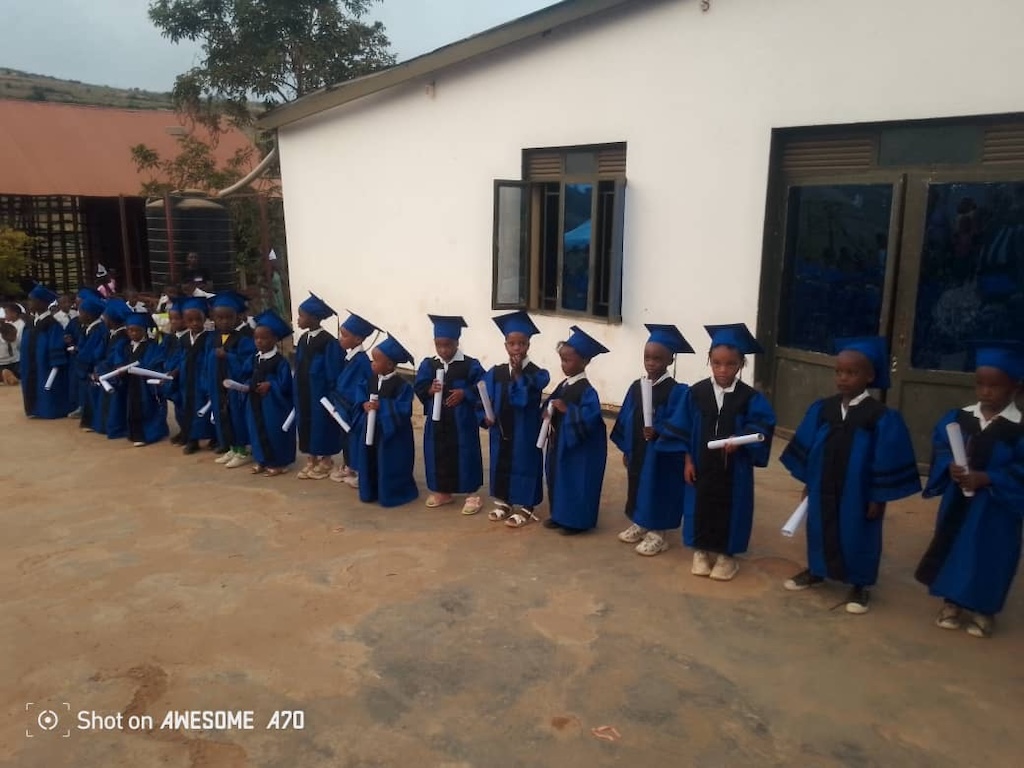
Today, there is a Mercy’s Nursery School, filled with some of the cutest children on earth, on that very property.
Now Mercy and Matthew were in Liberia, and Matthew shared the vision for a Mercy’s House with Pastor Paye. He was all in. He told Matthew about some land near Monrovia that would be perfect for a Mercy’s House.
As Papa Matthew held little orphaned Liberian children in his arms as they came to hug him every day, he knew they had to do this!
They finished their trip and returned home, praying that God would allow them to open a school in Mercy’s hometown.
Soon, God provided the money for the land, and it was purchased.
Not long afterward, Papa Matthew and Mama Lisa drove to meet some precious friends for dinner. Matthew had been praying hard for 18 months for a large gospel crusade tour he was planning in Rwanda. It was now just four weeks away, and he didn’t have a dollar to his name. It gave him a headache just trying to work up the courage to call off the trip.
As Mama Lisa drove them to meet the couple for dinner, Papa Matthew messaged Pastor Ndagijimana in Rwanda and said, “I’m so sorry, brother. I want to come so badly, but I haven’t received the finances I have been praying for, so I thought I should let you know now that I can’t come next month.”
He almost instantly replied, “I’m sorry too. But I trust God. I’m sad, though. There were many people waiting for you to come.”
Matthew cried, pounded on the dashboard, and put his head in his hands.
Lisa asked, “What’s wrong, baby?”
He told her, and she asked, “Well, how much do you need?”
He replied, “With everything we have going on in Colombia, Rwanda, and Liberia, I need $50,000.”
She replied, “God’s not broke. Let’s pray about it.”
He said, “I’ve been praying about it for 18 months! The more I pray, the less I have. If I pray for work, the work dries up. If I pray for donations, the donations stop coming. I don’t know what to do!”
She replied, “Then I’m going to pray about it. God’s timing is best.”
She prayed, and they arrived at the restaurant.
They had a wonderful dinner, and then their friends handed them an envelope and said, “This is really why we invited you to dinner. Please open it.”
Inside was a card that read:
“Never stop dreaming big, crazy dreams.”
Stapled to the card was a check for $50,000 for their work in Liberia and Rwanda!
Matthew’s mouth fell open, and he exclaimed, “What the heck?”
They laughed. They cried. They hugged. Then they headed home.
Papa Matthew quickly messaged Pastor Ndagijimana:
“Hold it!!! A miracle just happened! Don’t cancel anything! I will be there!”
He wrote back, “Praise God!!!”
They landed in Rwanda and headed out toward the western border, where they held stunning gospel crusades. Then they headed to the northern border of Rwanda for more gospel crusades.
On the way, they came down a winding switchback road on a steep mountainside, seemingly always just inches from the cliff’s edge. They wound down and down and down. Just as they finally straightened out on flat ground, one of the tires flew off the van and went bouncing down the road as the van careened to the side.
Wow! Thank You, Lord, for letting the tire wait until they were off the cliff!
The next morning, they held a crusade near the borders of Rwanda, Tanzania, and Uganda. At one of the meetings, a Ugandan evangelist who had crossed the border to attend the gospel meetings walked up to Rebekah and handed her a folded Ugandan flag.
He said, “The Lord has shown me that you will do mighty things in Uganda someday, and I wanted you to have this.”
Rebekah thanked him but thought he must be mistaken.
The meetings were so anointed. The crowds grew and grew until they had to move out into the street under tarps. Some of the men ran down to the local Seventh-day Adventist church and asked if they could borrow their pews. They agreed, and the men carried all the pews out and placed them in the muddy street.
As the meeting was about to start and everyone was praying hard, a whirlwind blew right through the crowd. They all trembled and looked at one another, saying, “You saw that too, right?”
“Yes! Yes, we did!”
They had such a powerful meeting, and then the rains came hard.
They began to wonder if they would have to cancel that evening’s crusade, but at the very moment the meeting was supposed to start, the rain stopped and the sun came out.
Papa Matthew preached his favorite sermon, “Recipe for a Miracle.”
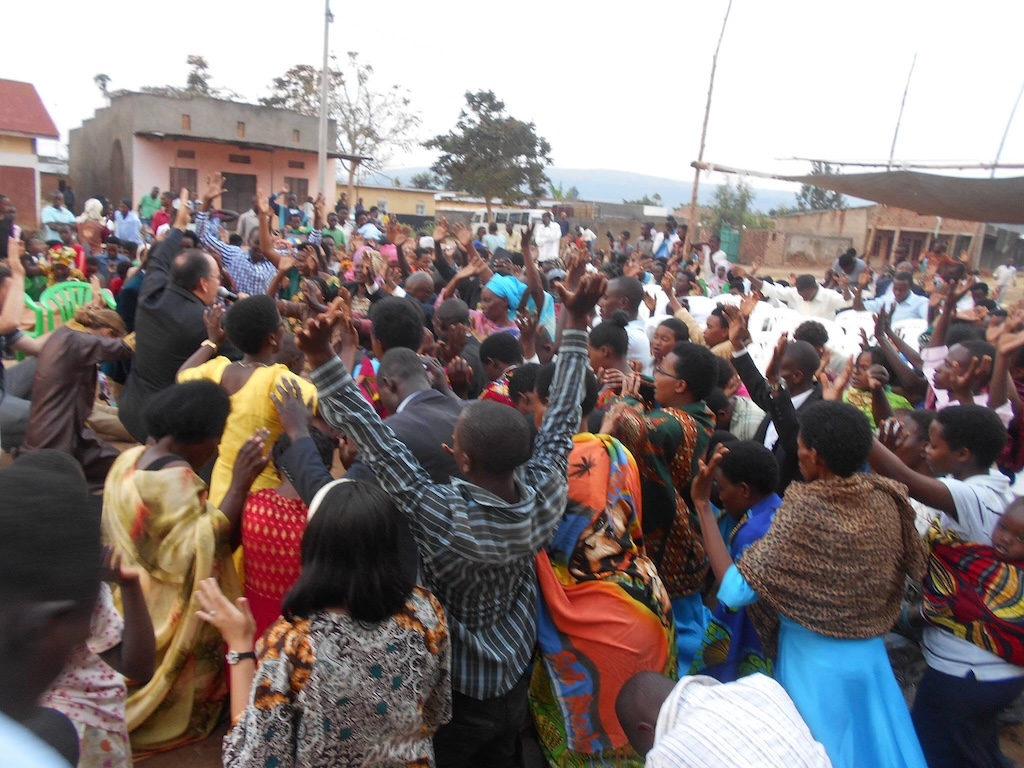
When he gave the invitation, the whole crowd of several hundred people knelt with him in the muddy street, praying for miracles.
After they stood, a very old woman came up to Matthew, fell on her face at his feet, and began kissing his feet and praying. He was deeply moved.
Next, a young woman came forward, very large with child.
They said, “Pastor, can you please pray over her? She is 12 months pregnant and cannot go into labor. She is waiting for the baby to die or for her to die.”
Stunned, they realized they were in the middle of rural Africa without hospitals, doctors, or medicine of any kind nearby, and this woman desperately needed a miracle.
They laid hands on her and prayed like never before.
Then the leaders whisked them away to the cars, and they headed back to the capital city of Kigali. The next morning, they flew out for Houston.
When they arrived home after 30 hours of travel, their phones were blowing up with messages from the Rwandans.
The young woman had given birth to a huge, healthy baby boy that very night after they prayed for her—and she survived!
Every year since, on the boy’s birthday, they send Papa Matthew a photo of the little boy and ask, “Miracle man, here is the little boy. When are you coming back to Rwanda for a healing crusade?”
Only God knows the answer to that question.
We serve an AUDACIOUS GOD.
Today, there is a thriving Mercy’s House in Liberia and a thriving Mercy’s House in Rwanda, and multiple churches have been planted.
And, by the way, that Ugandan evangelist was right.
The flag he gave Rebekah that day now hangs in Mission Moroto Christian Church in Uganda.
We serve an AUDACIOUS GOD.
www.missionmoroto.org #missionmorotostories